Lower Back Pain and Tight Hips: Causes and Treatment
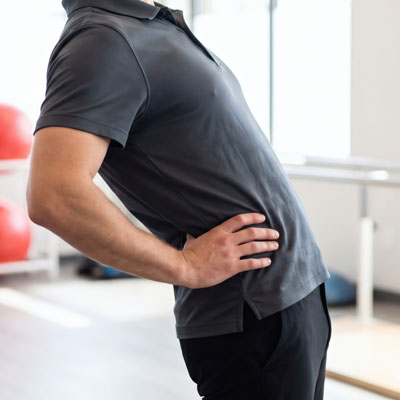
Lower back pain and tight hips often occur together because these areas work closely during everyday movements. When your hip muscles become tight or your mobility is limited, your lower back may have to work harder, leading to pain and discomfort.
Prolonged sitting, lack of movement, and muscle imbalances can all contribute to these symptoms. Gentle stretching, lifestyle changes, and appropriate chiropractic care in Fairfield, CT may help relieve discomfort and improve mobility.
Understanding the underlying causes can help you find the right approach to pain relief and better movement.
How are tight hips and lower back pain connected?
Your hips and lower back work together when you walk, bend, sit, or stand. When hip movement becomes limited, your lower back may compensate during certain activities.
Three muscle groups play important roles:
- Hip flexors: Help lift your legs and connect parts of your pelvis and lower spine to your thighs.
- Glutes: Support hip movement and help control your pelvis.
- Core muscles: Help stabilize your trunk during daily activities.
When these muscles become stiff, weak, or overworked, movement may feel uncomfortable.
However, tight hips do not always cause back pain. Both symptoms can also develop from muscle strain, joint problems, or other conditions.
What causes lower back pain and tight hips?
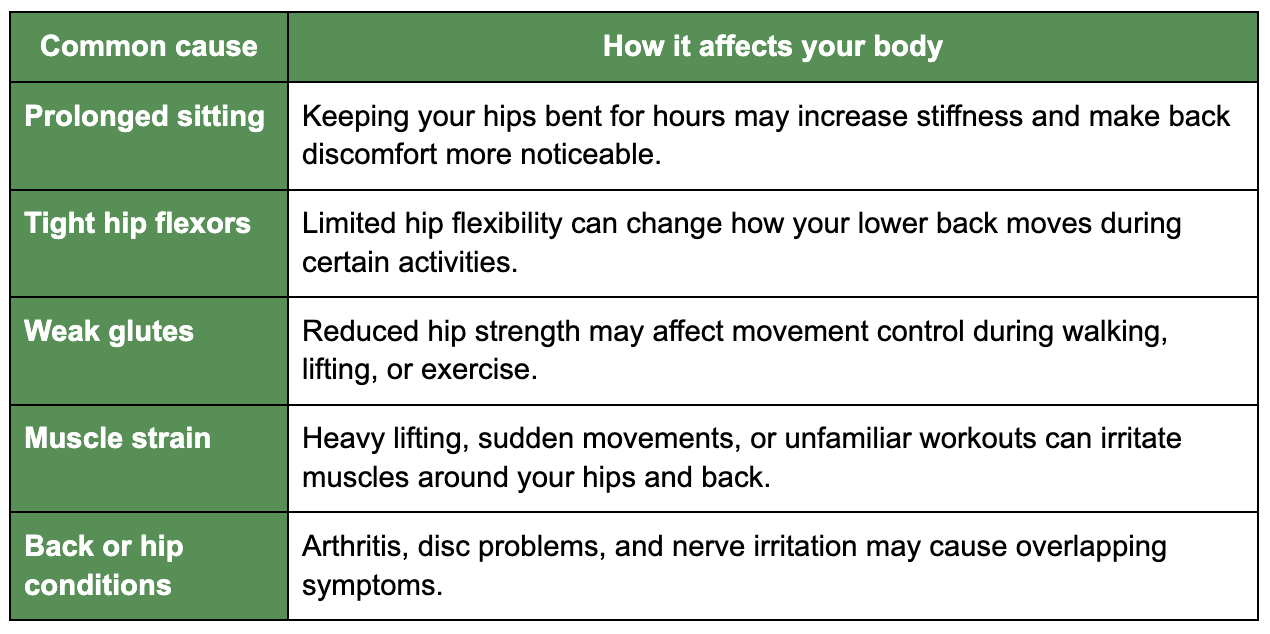
Several factors can contribute to discomfort in both areas. Understanding the possible causes can help you identify which activities may be affecting your body.
Can pelvic position affect lower back pain?
Your pelvis connects your hips to your spine. Its position changes naturally as you sit, stand, and move.
An anterior pelvic tilt occurs when the front of your pelvis rotates downward. It may occur alongside tight hip flexors or changes in muscle control.
However, pelvic tilt alone does not mean something is wrong or explain every case of back pain.
Some people also experience hip pain that radiates down the leg. This may involve the hip joint, lower spine, or surrounding nerves rather than simple muscle tightness.
What are the common symptoms of tight hips and lower back pain?
Symptoms may develop gradually, especially if you spend much of your day sitting or performing repetitive movements.
Common signs include:
- Hip stiffness: Difficulty moving comfortably after sitting.
- Lower back discomfort: Pain or tightness when standing, bending, or walking.
- Limited flexibility: Trouble bringing your knee toward your chest or rotating your hip.
- Muscle tightness: A pulling sensation around your hips, buttocks, or lower back.
- Movement discomfort: Symptoms that appear during exercise or daily activities.
Some people feel better after moving around. Others notice increased discomfort after physical activity.
Pay attention to pain that travels down your leg. Tingling, numbness, or weakness may suggest nerve involvement and should not automatically be treated as muscle tightness.
How can you relieve lower back pain and tight hips at home?
Gentle stretching, strengthening exercises, and regular movement may improve comfort and mobility.
The goal is not to force your hips into a deeper stretch. Instead, focus on movements you can perform comfortably and consistently.
1. Try gentle hip stretches
Stretching can help reduce the feeling of stiffness and improve your ability to move.
Kneeling hip flexor stretch
This stretch targets the muscles at the front of your hips.
- Kneel on one knee with your other foot in front.
- Keep your chest upright and gently tighten your abdominal muscles.
- Slowly move your hips forward until you feel a mild stretch.
- Hold for 15-30 seconds, then switch sides.
Avoid arching your lower back or pushing into pain.
Figure four stretch
This movement targets muscles around your buttocks and outer hips.
- Lie on your back with both knees bent.
- Place one ankle across your opposite thigh.
- Gently pull the supporting leg toward your chest.
- Hold for 15-30 seconds, then change sides.
You should feel a comfortable stretch, not sharp pain.
2. Strengthen your glutes and core
Flexibility is only part of healthy movement. Your hip and core muscles also need enough strength to support daily activities.
Consider these beginner exercises:
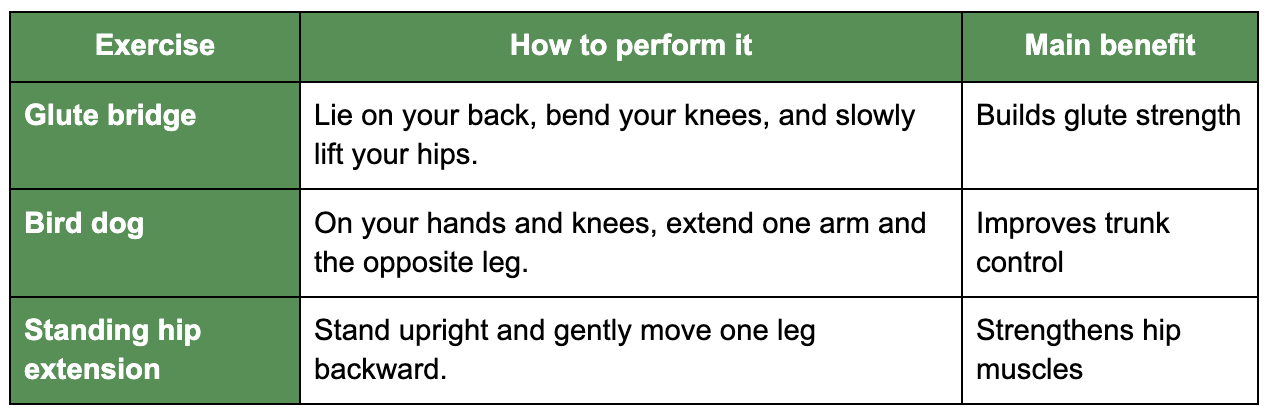
Start with a few controlled repetitions. Stop if an exercise causes sharp pain or worsening symptoms.
If you have a recent injury or significant pain, ask a healthcare professional which exercises are appropriate.
3. Use heat for temporary relief
A warm compress may help relax tense muscles and reduce the feeling of stiffness.
Apply comfortable warmth for around 15-20 minutes, using a towel between the heat source and your skin.
Avoid excessive heat, especially if you have reduced skin sensation.
Heat may improve comfort, but it does not treat every underlying cause of back or hip pain.
4. Move regularly throughout the day
Sitting for long periods can make your hips and back feel stiff.
Small changes may help:
- Stand and walk briefly during long work sessions.
- Change sitting positions throughout the day.
- Take comfortable walks when possible.
- Gradually return to regular activities instead of remaining inactive.
You do not need to maintain one perfect posture. Regular movement and comfortable position changes are often more practical than trying to sit perfectly all day.
What treatments help with lower back pain and tight hips?
If stiffness or pain continues despite home care, a professional evaluation can help identify the underlying problem.
Treatment may involve a combination of hands on care, exercise, and changes to daily activities.
Chiropractic care
Chiropractic care may help some people experiencing lower back pain related to joint movement or other mechanical factors.
A chiropractor may assess:
- Lower back and hip mobility.
- Muscle strength and movement patterns.
- Activities that increase or reduce symptoms.
- Signs that require medical evaluation.
Based on the findings, treatment may include spinal adjustments, mobility exercises, and personalized movement recommendations.
At Southport Chiropractic, we provide individualized care for patients experiencing back pain and related movement difficulties.
Massage therapy and corrective exercises
Massage therapy may help ease muscle tension and provide temporary relief from stiffness around the hips and lower back.
Corrective exercises focus on improving strength, flexibility, and movement control.
Together, these approaches may support more comfortable daily movement when they are appropriate for the underlying condition.
For example, someone with stiffness after prolonged sitting may benefit from regular movement and targeted exercises. Someone with nerve related symptoms may require a different treatment approach.
The right treatment depends on the cause of your symptoms, not simply where you feel tightness.
When should you seek medical care for lower back and hip pain?
Mild stiffness may improve with gentle movement and changes to your daily routine. However, persistent or worsening symptoms deserve medical attention.
Arrange an evaluation if you experience:
- Pain that continues for several weeks.
- Recurring stiffness that limits daily activities.
- Pain following an injury.
- Discomfort that regularly interrupts sleep.
- Pain traveling down your leg, especially with numbness or weakness.
Seek emergency medical care if you develop:
- New difficulty controlling your bladder or bowels.
- Numbness around your groin or anus.
- Rapidly worsening leg weakness.
These symptoms can indicate serious nerve involvement.
Recognizing the warning signs of serious back pain can help you understand when home treatment is not enough.
Conclusion
If your lower back pain and tight hips keep coming back, there may be more to consider than muscle tightness alone. Understanding how your body moves can help you find the right approach to relief.
At Southport Chiropractic in Fairfield, CT, Dr. Richard Pinsky and Dr. Cathy Brodows draw on decades of chiropractic experience to help patients understand their symptoms and improve their mobility. We focus on personalized care that considers your condition, daily activities, and individual needs.
Contact us to schedule an appointment and find out how we can help.
Frequently asked questions about lower back pain and tight hips
Can tight hips cause lower back pain on one side only?
Yes. Tight hip muscles may contribute to lower back pain on one side, although other conditions can cause similar symptoms.
How do I know if my back pain is coming from my hips?
Hip problems often cause groin pain or stiffness during movement. A physical examination can help identify the source.
What is the fastest way to relieve lower back pain and tight hips?
Gentle stretching, walking, and heat may provide temporary relief, depending on the cause.
When should I see a professional for hip and back stiffness?
Seek an evaluation if pain persists, worsens, or limits daily activities.