What Are the Symptoms of TMJ? 5 Signs You Shouldn’t Ignore
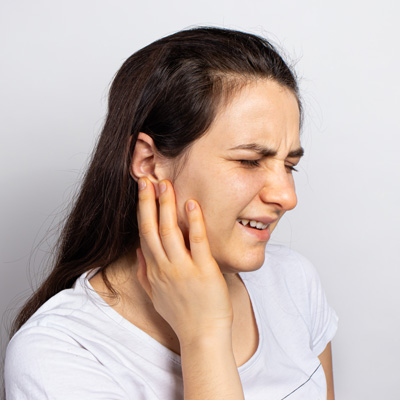
Your jaw clicks when you chew. You have constant headaches your doctor can’t explain. Your ears hurt, but the ENT says they’re perfectly healthy. You’re frustrated, confused, and starting to think you’re imagining things.
You’re not. Understanding what are the symptoms of TMJ disorder reveals why these seemingly unrelated problems are actually connected. At Southport Chiropractic in Fairfield, we help patients finally connect the dots between their mysterious symptoms and TMJ dysfunction. Once you understand the patterns, treatment becomes obvious.
1. Clicking, Popping, and Locking
That clicking or popping sound when you open your mouth isn’t normal – it’s your TMJ’s articular disc slipping out of position.
How the TMJ disc works: A small fibrocartilage disc sits between your jawbone (mandible) and skull (temporal bone). When functioning properly, this disc cushions movement and glides smoothly. When displaced, it creates audible clicking as it snaps back into position during jaw opening.
Progression of disc displacement:
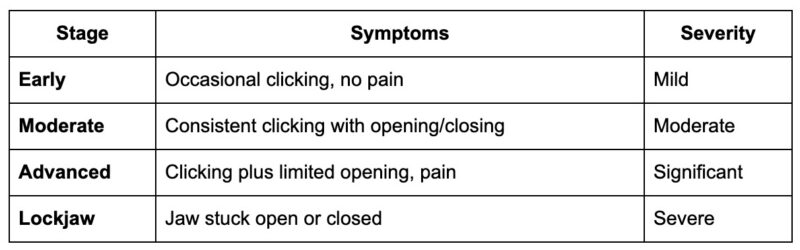
“Lockjaw” isn’t just mechanical: When your jaw locks, it’s often not the disc physically blocking movement – it’s protective muscle guarding. Your nervous system detects joint instability and reflexively tightens muscles to prevent further damage.
This muscle guarding response is why TMJ treatment must address both the joint dysfunction AND the neurological components driving muscle tension.
2. Headaches and “Pseudo-Earaches”
The “Behind the Eyes” Headache Pattern
TMJ-related headaches feel different from typical tension headaches or migraines. Patients describe them as deep pressure behind the eyes, at the temples, or radiating from the jaw up through the side of the head.
Why jaw tension creates head pain: The temporalis muscle – one of your primary chewing muscles – spans from your jaw to the sides of your skull. When chronically tight from TMJ dysfunction, it creates constant tension that manifests as headaches.
Additionally, trigeminal nerve irritation from TMJ inflammation can refer to pain throughout the face and head, mimicking ocular pressure or sinus problems.
Unexplained Ear Pain Without Infection
You’re convinced you have an ear infection. The pain is deep, throbbing, and sometimes creates a fullness sensation. But your doctor examines your ears and finds nothing wrong.
The TMJ-ear connection: Your TMJ sits directly in front of your ear canal – literally millimeters away. When inflamed, the TMJ creates referred pain that your brain interprets as coming from inside your ear.
TMJ ear pain characteristics:
- Deep aching in or around ear
- Fullness or pressure sensation
- Worse with chewing or jaw movement
- No signs of infection on examination
- Doesn’t respond to antibiotics
3. Shoulder Tension & Neck Stiffness
Here’s the structural connection most people miss: what are the symptoms of TMJ that can’t be fully understood without examining posture.
Forward head posture (tech neck) creates jaw misalignment: Every inch your head shifts forward changes the biomechanics of how your jaw closes. Your lower jaw must compensate for your altered head position, creating chronic muscle imbalance and joint stress.
The postural cascade:
- Head shifts forward from screen use
- Upper cervical spine (C1-C2) rotates to compensate
- Jaw alignment changes to match new head position
- Chewing muscles work asymmetrically
- TMJ experiences uneven loading
- Chronic inflammation and pain develop
Associated symptoms:
- Constant shoulder tension and knots
- Upper trapezius trigger points
- Neck stiffness on one side
- Difficulty turning head fully
- Grinding sensation in neck joints
4. Bite Changes & Dental Red Flags
Malocclusion: When Your Teeth Stop Fitting Right
Have you noticed your bite feels “off”? Your teeth don’t come together the same way they used to? This sudden malocclusion (improper bite alignment) is a red flag for TMJ dysfunction.
What causes bite changes: When the TMJ disc displaces or joint structures degenerate, your jaw’s resting position shifts. This changes how your upper and lower teeth contact each other – sometimes dramatically.
Bite change indicators:
- Teeth hitting differently than before
- Only certain teeth touching when you close
- Jaw feeling “crooked” when biting down
- Difficulty chewing on one side
Bruxism: Grinding Away the Evidence
Teeth grinding (bruxism) – especially at night – is both a symptom and cause of TMJ disorder. It’s a vicious cycle: TMJ dysfunction causes muscle tension that leads to grinding, which further damages the TMJ.
Signs you’re grinding:
- Worn tooth enamel (flat, shiny surfaces)
- Tooth sensitivity to temperature
- Broken or chipped teeth
- Tongue indentations on sides
- Morning jaw soreness
- Partner reports grinding sounds
Your dentist might recommend a night guard – which protects your teeth from damage but doesn’t address why you’re grinding. The underlying cause is often cervical spine and TMJ misalignment creating abnormal muscle activation patterns.
5. Neurological & Inner Ear Symptoms
Tinnitus: Ringing That Won’t Stop
That constant ringing, buzzing, or humming in your ears could be TMJ-related. The proximity of the TMJ to the ear’s auditory structures means inflammation can affect hearing perception.
TMJ-related tinnitus characteristics:
- Coincides with jaw symptoms
- Changes with jaw position or movement
- Often one-sided
- Associated with ear fullness
- No hearing loss on audiometry
Dizziness and Vertigo
TMJ inflammation can affect the vestibular system – your inner ear balance mechanism – creating dizziness, vertigo, or spatial disorientation.
Balance symptoms from TMJ:
- Room-spinning vertigo
- Feeling off-balance when walking
- Motion sensitivity
- Nausea with head movements
- Difficulty with quick head turns
This happens because proprioceptive (position sense) information from your jaw joints integrates with vestibular input to maintain balance. Disrupted TMJ signals confuse your brain’s spatial orientation processing.
How Chiropractic Care Resolves TMJ at the Source
Most TMJ treatment focuses on managing symptoms – mouthguards protect teeth, medications mask pain, and injections provide temporary relief. But none address the structural misalignments creating TMJ dysfunction.
Our corrective approach targets root causes:
Upper cervical spine adjustment:
- Corrects C1-C2 misalignment affecting jaw mechanics
- Removes nerve interference to jaw muscles
- Restores proper head-neck-jaw relationship
TMJ-specific adjustments:
- Gentle mobilization of TMJ itself
- Releases protective muscle guarding
- Restores proper disc tracking
Postural rehabilitation:
- Corrects forward head posture
- Strengthens neck stabilizers
- Retrains proper head-jaw positioning
Soft tissue therapy:
- Releases chronically tight chewing muscles
- Addresses trigger points in temporalis and masseter
- Improves tissue mobility
Find Your TMJ Solution
Now you understand what are the symptoms of TMJ – clicking and popping, headaches and ear pain, shoulder tension, bite changes, and neurological symptoms. More importantly, you understand these aren’t random problems but connected symptoms of spinal-cranial dysfunction.
At Southport Chiropractic, we don’t just treat TMJ symptoms – we correct the structural problems creating them.
Stop treating symptoms. Start correcting causes. Call Southport Chiropractic now or book online.