
Signs Your Herniated Disc Is Healing: Symptoms and Recovery
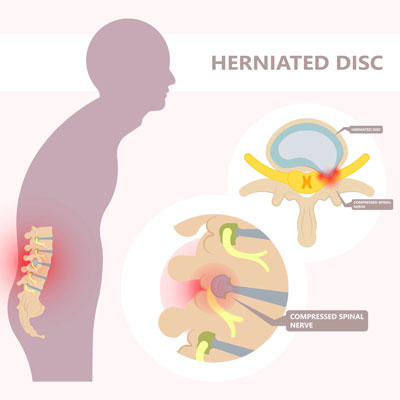
The signs your herniated disc is healing can show up in several ways. Pain may become less intense, symptoms may stop traveling as far down your arm or leg, and everyday movements may become easier.
Recovery does not always mean every symptom disappears at once. Pain, numbness, tingling, weakness, and movement may improve at different rates. At Southport Chiropractic in Fairfield, CT, we look at changes in symptoms and function to better understand how a person is progressing.
7 signs your herniated disc is healing
Early improvement from a herniated disc often shows up as changes in pain, nerve symptoms, movement, strength and sleep. Tracking these changes over time can give you a clearer picture of whether your symptoms are improving and normal activities are becoming easier.
1. Pain centralization
Pain that once traveled into the foot, calf, hand, or arm may begin to move closer to the lower back or neck. This pattern, known as centralization, can be a positive sign in people with radiating nerve pain because symptoms are no longer extending as far from the spine.
2. Changing pain type
Sharp, shooting, or electric pain may gradually become a dull ache, soreness, or stiffness. Pain may also become less intense or occur less often as inflammation and irritation around the affected nerve decrease.
3. Better movement
Bending, walking, sitting, standing, and changing positions may become easier as symptoms improve. You may also be able to stay in these positions for longer before pain starts or increases.
4. Returning strength
A herniated disc that irritates a nerve can sometimes contribute to weakness in an arm or leg. As nerve function improves, activities such as climbing stairs, walking, gripping objects, or lifting light items may become easier.
5. Fading numbness
Numbness, tingling, and pins and needles may gradually become less noticeable, occur less often, or affect a smaller area. These sensations can take longer to improve than pain because irritated nerves may need more time to recover.
6. Less need for pain medication
As pain becomes easier to manage, some people may find that they need pain relievers less often. Medication use should still follow the instructions of your doctor or other healthcare provider, especially if you take prescription medication.
7. Improved sleep
Pain from a herniated disc can make it difficult to fall asleep, stay asleep, or find a comfortable position. Waking less often because of pain and being able to change positions more comfortably can be another sign that symptoms are settling.
Stages of herniated disc recovery
Herniated disc recovery usually happens gradually. The timeline can vary depending on the type of herniation, nerve involvement, and severity of symptoms, but these stages provide a general idea of what you may notice during recovery.
Stage 1: Early recovery (1-2 weeks)
During the early stage, pain and irritation around the affected nerve may begin to settle. You may notice:
- Severe or constant pain becomes easier to manage.
- Less pain with simple movements such as walking or changing positions.
- Muscle tension or spasms beginning to decrease.
Stage 2: Gradual improvement (2-6 weeks)
As symptoms continue to settle, changes in radiating pain and nerve symptoms may become more noticeable. You may experience:
- Pain traveling less far down the leg or arm.
- Less numbness, tingling, or pins and needles.
- Longer periods of sitting, standing, or walking with less discomfort.
- Fewer or less intense pain flare ups.
Stage 3: Functional recovery (6-12 weeks)
During this stage, the focus shifts toward restoring normal movement and daily function. You may notice:
- Better flexibility and more comfortable movement.
- Improving strength in the affected arm or leg.
- Greater tolerance for work and everyday activities.
- A gradual return to more of your usual routine.
Stage 4: Ongoing recovery (12 weeks and beyond)
Some people continue to improve after the first few months, particularly when nerve symptoms are present. During this stage:
- Numbness or tingling may continue to fade.
- Strength and activity tolerance may continue to improve.
- Normal activities may become easier with fewer symptoms.
- Occasional stiffness or flare ups may still occur.
These timeframes are approximate. Pain, sensation, strength, and movement do not always recover at the same rate, so some people may move through these stages faster or slower than others.
How to support herniated disc recovery
Recovery does not require staying completely still. In many cases, appropriate movement is an important part of conservative care.
A few general principles can help:
- Stay active within comfortable limits. Complete bed rest for long periods can make returning to normal movement more difficult.
- Pay attention to radiating symptoms. Repeatedly doing something that sends pain farther down an arm or leg may be a sign that the activity needs to be modified.
- Return to activities gradually. Feeling better does not always mean you are ready to return immediately to every previous activity at full intensity.
- Follow individualized recommendations. The right exercises and activity level depend on the location of the disc problem, symptoms, and nerve involvement.
- Have persistent symptoms evaluated. An evaluation can help determine why symptoms continue and which conservative options may be appropriate.
When should you have your recovery evaluated?
Improvement is a good sign, but persistent symptoms can make it difficult to know whether your recovery is progressing as expected. An evaluation may be helpful if:
- Pain is still limiting sitting, walking, working, or sleeping.
- Pain continues to travel into your arm or leg.
- Numbness or tingling is not improving.
- Strength has not returned to the affected arm or leg.
- Symptoms repeatedly return when you increase your activity.
- Your progress has slowed or stopped.
At Southport Chiropractic, we evaluate your symptoms and movement to determine what may still be limiting your recovery. Care may include chiropractic treatment or spinal decompression therapy when appropriate.
Seek prompt medical attention for loss of bowel or bladder control, saddle numbness, or severe or worsening weakness.
Frequently asked questions
Can a herniated disc heal on its own?
Yes, some herniated discs can improve without surgery. Symptoms may decrease as inflammation and nerve irritation settle, and research shows that some lumbar disc herniations can also shrink or resorb over time.
Can a herniated disc flare up while healing?
Yes. Recovery can include temporary flare ups, especially after changes in activity. Look at the overall pattern. Flare ups that become more frequent, more intense, or cause symptoms to spread should be evaluated.
Can you still have pain while a herniated disc is healing?
Yes. Pain does not always disappear immediately. A better sign of progress may be pain that becomes milder, occurs less often, travels a shorter distance, or interferes less with normal activities.
Does a herniated disc get smaller as it heals?
It can. Studies using follow up imaging have documented spontaneous regression or resorption of lumbar disc herniations. However, the likelihood varies depending on the type of herniation, and symptom improvement does not depend only on disc size.
How do you know when a herniated disc has healed?
Signs of recovery include less pain and numbness, improving strength and movement, and being able to return to normal activities with fewer symptoms.
Take the next step in your recovery
You do not have to wait until the pain becomes severe again to have your progress checked. If your herniated disc symptoms have improved but you are still dealing with radiating pain, numbness, weakness, or difficulty returning to normal activities, Southport Chiropractic can evaluate where you are in the recovery process.
Our goal is to identify what is still limiting your movement and function and determine whether conservative care is appropriate for your situation. Contact us to schedule an evaluation and discuss the next step in your recovery.