
Deep Tissue Laser for Knee Pain: Can It Help Relieve Pain?
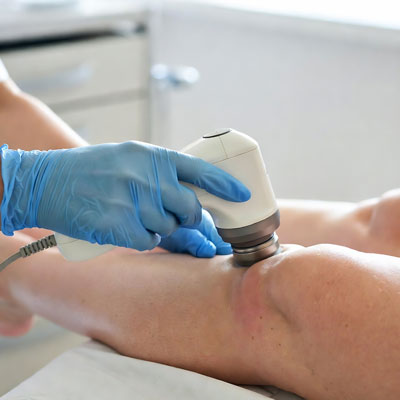
Deep tissue laser for knee pain is a noninvasive treatment that uses focused light energy to reach tissues around the knee. It may help reduce pain and support the body’s natural healing response, depending on what is causing the symptoms.
Knee pain can come from arthritis, overuse, tendon irritation, sports injuries, or other problems. That is why the cause matters when deciding whether laser therapy is appropriate.
At Southport Chiropractic in Fairfield, CT, we look at the source of knee pain and how it affects movement before determining which conservative treatments may be appropriate.
Understanding deep tissue laser therapy
Deep tissue laser therapy uses specific wavelengths of light that penetrate below the skin to reach targeted tissues. This process is often called photobiomodulation.
Unlike a surgical laser, it does not cut or remove tissue. Instead, cells in the treatment area absorb light energy, which may influence processes involved in inflammation and tissue repair.
Deep tissue laser therapy is used for a range of muscle and joint problems, including knee pain.
How deep tissue laser works for knee pain
When laser light reaches the tissues around the knee, cells absorb the light energy. This may influence inflammation and pain while supporting natural tissue repair processes.
The process can be understood in three steps:
- el=”1″>Light reaches the targeted tissue. The laser is applied over specific areas around the painful or injured knee.
- Cells absorb the light energy.style=”font-weight: 400;”> This may influence cellular processes related to inflammation and recovery.
- Symptoms may improve over time. Reduced irritation may make movement more comfortable.
e=”font-weight: 400;”>How much benefit someone experiences can depend on the cause and severity of the knee pain.
What types of knee pain may benefit from laser therapy?
Laser therapy may be considered for several causes of knee discomfort, but it is not appropriate for every knee problem.
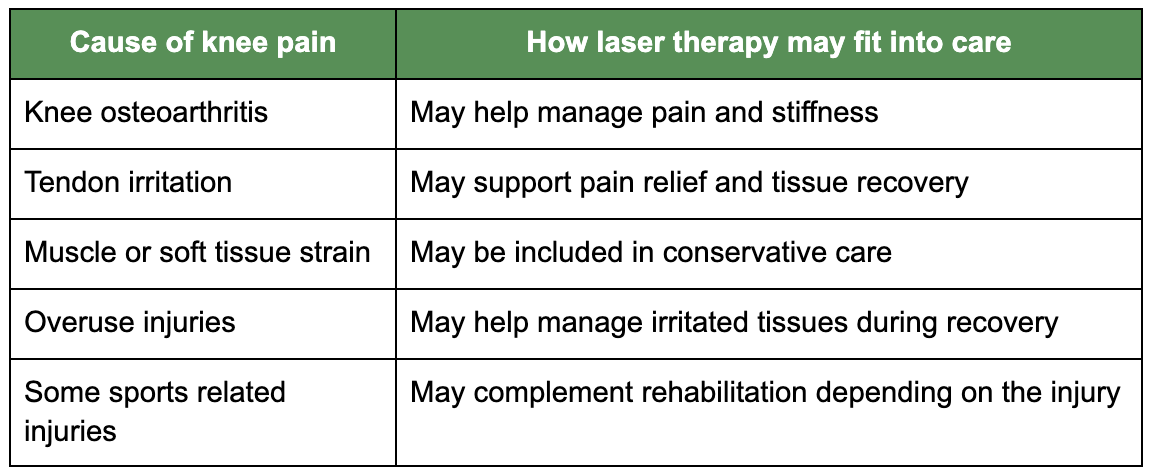
Finding the cause comes first.=”https://chiroct.com/knee-pain/”> Knee pain can result from osteoarthritis, tendon problems, meniscus injuries, bursitis, and other conditions, so laser therapy may be more appropriate for some conditions than others.
Potential benefits of deep tissue laser for knee pain
Depending on the cause of knee pain, potential benefits of deep tissue laser therapy may include:
- Reduced pain.
- Less stiffness.
- Support for the body’s inflammatory response.
- Support for tissue recovery.
- More comfortable movement.
- Noninvasive treatment.
Laser therapy can also be included as part of a broader conservative care plan. Results vary depending on the condition, severity of symptoms, and individual response to treatment.
What does laser treatment for the knee feel like?
Deep tissue laser therapy does not involve an incision or injection. During a session, the laser applicator is directed over specific areas around the knee based on the location and nature of the problem.
Some people may notice a gentle warming sensation as the laser is applied. The experience should not feel like a surgical procedure because the laser is being used to deliver therapeutic light rather than cut tissue.
Treatment time and the number of sessions can vary. There is no single schedule that is right for every person with knee pain. The plan should depend on the condition being addressed, its severity, how long symptoms have been present, and how the knee responds over time.
Safety considerations for deep tissue laser therapy
Deep tissue laser therapy is noninvasive, but it still needs to be used appropriately. Protective eyewear is used during treatment, and your health history and knee condition should be reviewed beforehand.
Laser therapy should not replace appropriate medical evaluation when knee pain may involve a fracture, serious injury, infection, or another condition requiring different care.
When to have knee pain evaluated
Consider having knee pain evaluated when:
- el=”1″>Pain follows a significant injury.
- You have difficulty putting weight on the leg.
- The knee is significantly swollen.
- The knee repeatedly gives way or feels unstable.
- The joint locks or becomes difficult to move.
- Symptoms continue or become worse.
These symptoms may require further evaluation before laser therapy is considered.
Laser therapy as part of a knee pain treatment plan
Laser therapy may be combined with chiropractic care, rehabilitation, movement strategies, or activity changes depending on the cause of knee pain. While laser therapy may help manage discomfort and support recovery, other parts of care may focus on improving movement, strength, and knee function.
FAQs about deep tissue laser for knee pain
Does deep tissue laser therapy hurt?
Deep tissue laser therapy is noninvasive and does not involve needles or incisions. Some people may notice warmth in the treatment area, but the experience can vary.
How many laser therapy sessions are needed for knee pain?
There is no standard number for everyone. The number of sessions can depend on the cause of knee pain, symptom severity, how long the problem has been present, and how the knee responds to treatment.
Can deep tissue lasers help knee arthritis?
Laser therapy may help reduce pain and improve function for some people with knee osteoarthritis. Research has shown benefits with certain treatment protocols, but results vary and laser therapy does not reverse the underlying arthritis.
Can laser therapy repair knee cartilage?
Laser therapy should not be viewed as a proven way to regrow lost knee cartilage. Its more realistic role is to help manage symptoms and support cellular processes involved in inflammation and tissue recovery.
Can laser therapy be combined with other knee pain treatments?
Yes. Depending on the cause of knee pain, laser therapy may be combined with other conservative approaches such as chiropractic care, rehabilitation, movement strategies, and activity changes.
Finding the right approach for persistent knee pain
Deep tissue laser for knee pain may provide a noninvasive option for managing discomfort and supporting recovery when appropriate for the underlying condition.
Southport Chiropractic provides deep tissue laser therapy and conservative care for knee and other musculoskeletal problems. If knee pain continues to affect walking, exercise, or daily activities, contact us to find out whether laser therapy may be appropriate for your condition.